Wednesday, July 3, 2013

Perspective

If you've already read David McCullough's excellent 1776 you might not find a lot of new information in Joseph Ellis' newest book, Revolutionary Summer: The Birth of American Independence. In fact, I think Ellis himself has already covered some of the same ground in his other books such as His Excellency, First Family, and Founding Brothers. What Ellis brings to the summer of 1776, however, is perspective.

We get a perspective of John Adams trying to manage a revolution while events quickly spin beyond his control. Adams could see that any attempt at reconcilliation with Britain was pointless, but not everyone in the Continental Congress was as convinced. In May he wrote what has come to be known as the Preamble to The Declaration of Independence. Nonetheless, he orchestrated things as well as he could in Philadelphia, got someone else to write an 'official' Declaration, and as the head of the Board of War and Ordnance was one of the few who knew just how badly things were going with the army. All the while he had to worry about his family in Boston, who was dealing with an enemy even more feared than Great Britain: smallpox.

We get the perspective of George Washington, trying to live up to the expectations of the Continental Congress and assemble an army bearing some semblance of order to face the well-trained and professional army just arrived from overseas. Everyone expected great things after Bunker Hill (which was actually a British victory, but so very costly for them) but New York was a very different situation. The city and its islands were essentially indefensible, and the sympathies of the inhabitants leaned more toward the British. Washington’s attempted defense ended in a costly and embarrassing defeat that had the potential to end the nascent rebellion just as it was beginning.

We get Benjamin Franklin's confidence that "The Cause" would prevail. He even accused King George of being the cause of the rebellion. If not for the way he treated the colonies by sending armies and foreign mercenaries to oppress them, the colonists would have been happy subjects.  The king's actions had effectively started the war according to Franklin's logic.

And we get the perspective of just how close it came to going the other way that summer. Ellis dispels any myths we might still have from our grade-school education that the American Revolution was accomplished with the signing of The Declaration of Independence, or that the war was won handily by a rag-tag bunch of scrappy colonists confidently and enthusiastically backing the American Cause. In fact, few people considered themselves "Americans" at the time; instead they were Virginians, Pennsylvanians, Bostonians, etc. Unity would come, but it was precarious in 1776.

But the best perspective, in my opinion, was why General Howe (and his brother Admiral Howe) failed to deliver a decisive blow in New York that could have destroyed the Continental Army. Having served in America previously and having a feeling of brotherhood for the Americans, General Howe wanted to go softly and play the part of the diplomat – ending the rebellion with minimal loss of life on both sides. It's a surprisingly human perspective we don't usually grant to the "enemy" in the war. And to me that was the main value in this short book, and why I always jump on the opportunity to read a book by Joseph Ellis. (I received an advance copy from Amazon Vine.)

Saturday, June 29, 2013

"The Arctic shows no mercy..."

Looking for a great summer read?  I've come across several excellent books the last few months I'd recommend like The Last of the Doughboys, Toms River, and The Boys in the Boat, and I'll add one more: If you loved Unbroken (and who didn't? It's still on the NYTimes best-seller list) you'll love Frozen in Time: An Epic Story of Survival and a Modern Quest for Lost Heroes of World War II by Mitchell Zuckoff, too.

In November 1942 a cargo plane on its way to Europe crashed on the Greenland ice cap. The crew of 5 survived the crash but were in a dangerous situation. No one knew exactly where they were, and four days later a B-17 involved in the search-and-rescue with 9 men aboard crashed as well. With winter weather making searches difficult and frequently impossible, the men faced sub-zero temperatures and hurricane force winds with little protection except a plane broken in half and only a couple of days worth of food. Even more frightening was the glacier they sat on, which was riddled with deep crevasses that were hidden by thin layers of snow and ice preventing them from leaving and keeping rescuers from reaching them.

This is an incredible story of danger and survival in one of the least hospitable places on earth. It's by the same author who wrote Lost in Shangri-La but I think this one is better. (It's a lot like Unbroken but with a Shackleton-like twist.) The situation of the crashed men continually goes from bad to worse, and would-be rescuers willingly put their lives at risk for strangers. It's a story full of heroes, but it's also two stories in one as Zuckoff tells of the modern-day efforts to find the wreckage and retrieve any bodies still on the ice cap – a story that's still in process. (I received an advance copy from Amazon Vine.)

Friday, June 21, 2013

"Some beauty which ordinary men can't see"

"In a sport like this – hard work, not much glory... – well, there must be some beauty which ordinary men can't see, but extraordinary men do."
— George Yeoman Pocock

What do you know about the sport of rowing, or "crew" as it is called? All I 'knew' was that it seemed to be a sport for rich kids at snooty East Coast prep schools. And while that's probably not entirely inaccurate, it's also not the whole picture. Most importantly it's not the picture painted by Daniel James Brown in The Boys in the Boat: Nine Americans and Their Epic Quest for Gold at the 1936 Berlin Olympics.

Before the Olympics became dominated by corporate-sponsored athletes, the gold medal for Crew (the sport of rowing a racing shell) at the 1936 Berlin Olympics was won by a team of students from the University of Washington. They not only beat their West Coast rivals (UC Berkeley) but the elite East Coast teams as well to earn the honor of representing their country. And in a thrilling come-from-behind race they beat prestigious European teams despite an unfair disadvantage. They were not a bunch of over-privileged kids whose parents rolled in the highest levels of society but "the sons of loggers, shipyard workers, and farmers." They were mostly kids for whom the Depression had taken a huge toll, and being on a team meant not scholarships but a chance the school might help them find a job.

Brown introduces us to the coach and the whole team, but the heart of his story is one rower who came from especially difficult circumstances. Joe Rantz had known more than his fair share of hardship including the death of his mother, but when his father abandoned him as a teenager he had to quickly learn to fend for himself. Going to the university seemed like a way out of poverty, and through his hard manual labor and scrimping and saving he managed to pay for school one year at a time. Being part of a team, however, required him to trust others more than he dared – more than life had taught him was safe.

Brown is truly a master story-teller as he puts the reader in the middle of the Great Depression with all its uncertainty, inequality, and fear. He also mixes in that other threat looming on the horizon in the 1930s: Hitler and Nazi Germany. Joe and his teammates quickly became people I cared about and I found myself unable to put the book down and cheering each success and sorrowing over each setback. I especially loved the quotes from George Pocock, the wise yet unassuming boat-builder for the team who sees a spiritual side of the sport and the way it can build character through teamwork. I even found myself wishing to slip into a boat and start rowing! This is an inspiring book I highly recommend.  (I received an advance copy from Amazon Vine.)

"It is hard to make that boat go as fast as you want to. The enemy, of course, is resistance of the water... but that very water is what supports you and that very enemy is your friend. So is life: the very problems you must overcome also support you and make you stronger in overcoming them."

Sunday, June 16, 2013

Carpinteria 2013

I hope my kids know what a good mom they have!  In addition to camping in Yosemite Jamie also planned for a week at the beach house.  Of course, when all these plans were made we didn't know where or when Braiden would be leaving for his mission, but that never stops Jamie.  Nothing is more important to her than family!

 Braiden and me.

Some days were sunny and beautiful, and so clear we could see the Channel Islands and from Santa Barbara to Ventura...

... and other days we just enjoyed the "June gloom."

Tahoe and Taylor digging a big hole...

... and the younger kids playing in it.
 
Dillon, Maddie, and Jesse at the tide pools.

Grandma Christie with all the grandkids (except Jack, who wasn't feeling well).

We enjoyed movies on the beach a couple of nights.

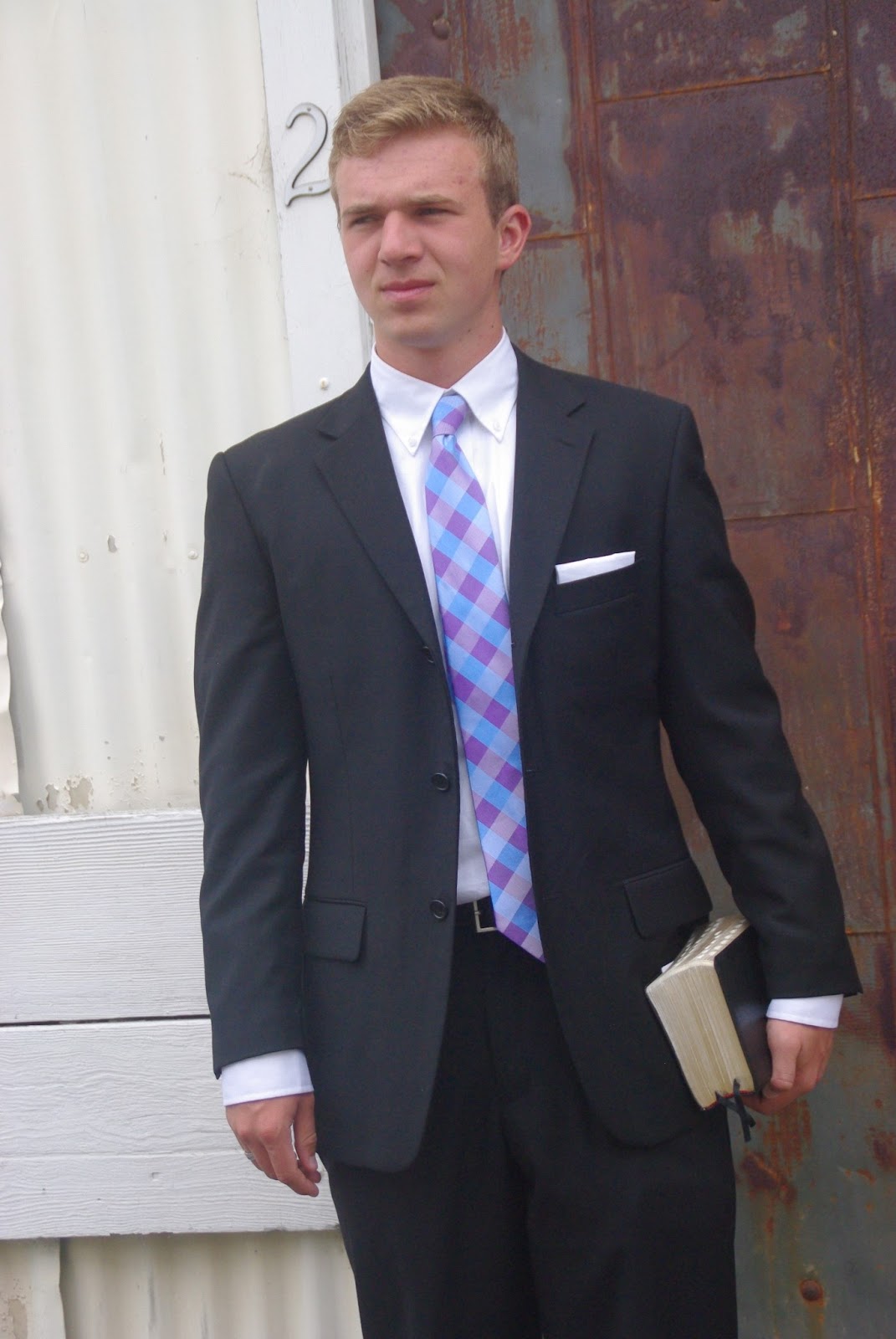
Jamie wanted to take some "missionary photos" of Braiden around town (she's seen a lot of them on Facebook - apparently it's a popular thing in Utah).

She even rounded up some 'street urchins' for him to teach.

Only a week and a half to go.
 
Too bad vacations have to end.

Saturday, June 8, 2013

Yosemite 2013

Since Braiden will be leaving us again in a month – this time for 2 years – Jamie has been trying to plan a special family vacation and we were lucky enough to get camping reservations in Yosemite on Memorial Day weekend.

Even with the carrier on the top of the car the poor kids were packed in among all the stuff we had to take.  Oh well, they made it a few hours before the complaining really started.

I think the last time we went to Yosemite was around 2006...

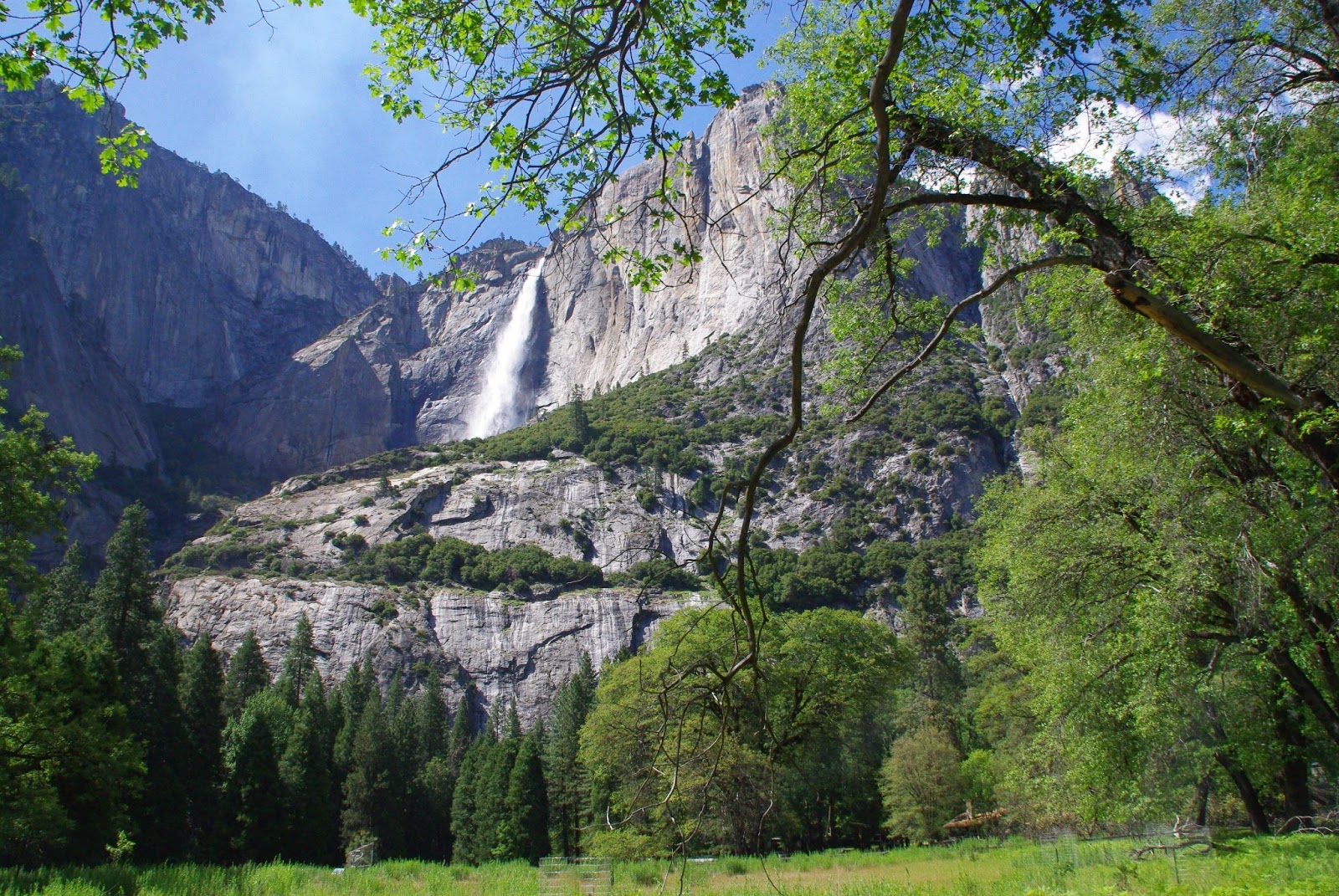
... and it looks like the kids have grown a little since then.  The view is a little better from the left side parking lot – that's Bridal Veil Falls above Taylor's shoulder.  (And I think the air is clearer, too.)

We planned to do a lot more hiking than we ended up doing, but Vernal Falls was strenuous enough.  Here's a picture from the hike on the way up.

And a picture from the top.

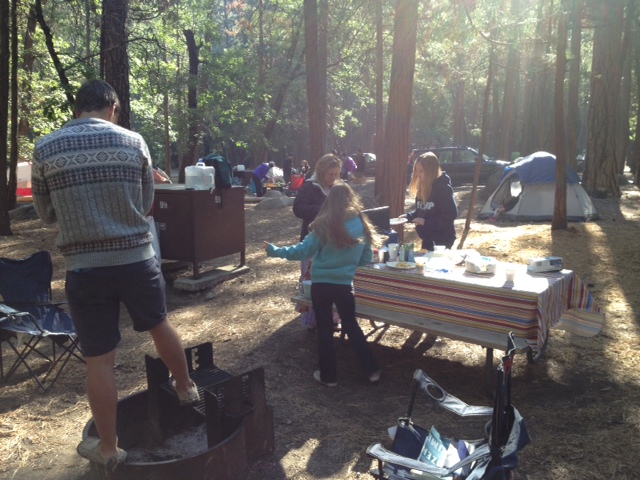
Home for the weekend: Upper Pines campground.  Breakfast always tastes better out in the woods.
 

Chillin' at the dumpster.


It turned out they had church Sunday morning.  Nearby LDS wards take turns holding Sacrament meeting.

After church we hiked up to Yosemite Falls.  Of course, the kids hiked all the way up to the falls.  Taylor needed a really close look.

Yosemite Falls.

Thursday, May 30, 2013

Setting the bar high


There are a number of people I admire but right at the top of that list would have to be Jack Fitzgerald, my wife's grandfather. He was one of the nicest people I've ever met and would always greet you with a smile, and you knew he was sincere when he said it was good to see you. And he was one of those people that made a real and positive difference in the lives of others – LOTS of others! When he passed away a few years ago he was lovingly remembered by so many people who had been his students back when he was a teacher, coach, and principal, and many of those people were then in their 60s or older and had stayed in touch with him through the years.

But I can't think of Jack without also thinking of his beautiful wife, Doris. She was perhaps the classiest person I've ever known and Jack treated her like a queen. They were married on May 30th, 1942. The United States had entered World War II and I think he was in officer training with the Navy in Chicago at the time. If I remember the story correctly, she drove there by herself from California so they could be married before he was deployed.

But the reason I'm thinking of them today is that Jamie and I were married on their 50th anniversary. And as we celebrate our 21st – which would have been their 71st – I hope that I can always be as patient and kind and loving to my beautiful wife as Jack was to his. He set the bar pretty high, but that's where it should be.

Wednesday, May 22, 2013

Last winter's vegetable garden

Yes, I know it's nearly summer already, but I forgot to post some pictures on how my winter vegetables fared. Since our winters are pretty mild here in Southern California I planted a few seeds last November or December in some large pots.  And one really big benefit is that you don't have to deal as much with the usual pests of summer, although I still had some problems with caterpilars.


Who knew carrots came in anything but orange? They grew slowly, but grew nonetheless. I picked up a packet of seeds from Renee's Garden Seeds with orange ("Mokum"), purple ("Purple Rain"), and white ("White Satin") carrots. The longest were about 6" or 7". Unfortunately, the purple color was only in the skin, and if you peeled them they looked just like regular orange carrots, but they tasted very good. The most surprising one for me was the white carrots, which were sweeter than regular carrots. I planted another purple variety ("Purple Dragon") this spring which has the purple color almost to the center, but I really want to try some more white ones (and yellow, too).


I also tried parsnips, but they were even slower growing than the carrots. The first batch I planted didn't sprout very well so I soaked some more seeds overnight and they germinated much better.  I harvested a few of the bigger ones (above, and they really weren't very big) but left the rest in the pot and planted some more carots with them. I don't know if they'll be any good by the time I dig them out but I figured it couldn't hurt to try. (And if you've never eaten parsnips, you're missing out!)


I also planted some snap peas ("Sugar Snap" I think) on the small trellises I had left over from last summer's beans. They did better this year than the last time I tried them but still not as well as the first time. (Maybe I need to use an inoculant?)  The kids like eating them straight off the vine but I think I'll try regular garden or "shelling" peas instead next winter.

I planted some green "bunching" onions as well, and they did very well, although I forgot to take a picture. But they sure tasted good chopped up with twice-baked potatoes!  (Actually, I should have taken a picture of the twice-baked potatoes!)

This summer, in addition to the carrots I'm also trying some turnips – I don't think I've ever eaten a turnip before – as well as a different kind of green beans and zucchini.

Friday, May 17, 2013

Come Dancing

I'm not a fan of The Kinks (most of their music was before I started listening), but I love love love this song!  (Apparently, a lot of other people loved it, too, because it was their biggest US hit and reached #6 on the charts in 1983.)  Out of curiosity I looked it up on Wikipedia and it was written as a tribute to the singer's older sister.  In the song she has a happier ending than in real life – she gave him his first guitar for his 13th birthday and sadly died that night from a heart condition while dancing.  Supposedly the song is very "English" and emulates "a fairground calliope" (and I guess the video goes along with that) but I always thought it sounded Mexican, especially with the trumpets and the way he sings (maybe he's trying to sound like a child?).  So in my mind I've always pictured a Mexican family in Los Angeles back in the 1950s.  What do you think?


Friday, May 10, 2013

"Beautiful Tar, the outcome bright..."

Last Friday I posted a list of reasons why bottled water isn't a good idea. It was taken from a book about public water policy and mostly leaned on the environmental burden of plastic manufacturing and water distribution. One reason, however, was that because the bottled water industry isn't as regulated as municipal water (tap water) it isn't as reliably safe. The book gave a couple of instances of bad bottled water but said in developed nations – such as the good ol' US of A – tap water is generally safer. I probably wouldn't have thought twice about it except that I happened to be reading another book where that definitely wasn't the case.

As I said in the other post, water isn't just for drinking; it's also used in agriculture and energy production.  And manufacturing.  And the problem for manufacturing companies, especially chemical manufacturers, is what to do with the waste products. Disposing of it safely can get expensive and eat up profits, so historically companies just dumped it in a river and it was on its way to the ocean – or at least it wasn't their problem anymore. Of course, a river can only take so much before people start to notice... and complain!

Toms River was just a pretty little place near the New Jersey shore when Ciba-Geigy relocated their manufacturing there in 1949. They were moving operations from Cincinnati (and the Ohio River) where they'd been making fabric dyes from petroleum and tar products for years. Before that they'd made their products in Basel, Switzerland, along the banks of the Rhine River. They purchased a large piece of wooded property and built their factory in the middle, surrounded by trees and hidden from the outside. But they didn't dump all their wastes into the river – that would have drawn complaints. Instead they burned some of it (at night to reduce complaints from the town about the smell) and built holding ponds on the property. Unfortunately those ponds weren't lined and the wastes seeped easily into the sandy soil (the level sometimes dropping as much as five feet a day) and into the groundwater that provided the growing town's drinking water. But it wasn't just Ciba polluting the town and water. In an effort to keep disposal costs down, Union Carbide paid an unscrupulous contractor to "dispose" of their wastes and it ended up being dumped in a pit in the back corner of an old egg farm.

Toms River: A Story of Science and Salvation by Dan Fagin tells the story of how a cluster of children in Toms River (actually named Dover Township) developed cancer, and the medical sleuthing that was able to point the finger at the toxic wastes being generated nearby. And for a fairly lengthy book (460 pages) it's pretty hard to put down. Fagin covers not only Toms River but also the history of how links to cancer were uncovered along the way – and it's a fascinating story. I found his explanations of how cancers happen (there are about 150 different kinds) as well as the history of the chemical industry very interesting, not to mention disturbing – the part about "salvation" in the title is misleading, since there wasn't much of it in the story. The science gets a little technical, but not overly so. And it's plain from the beginning who the bad guys in this story are, but Fagin does a good job explaining why it's so difficult to prove blame in such cases (even if his telling doesn't always feel very balanced). And as for blame, Fagin makes it clear it wasn't just the chemical companies – plenty of people from politicians to plant workers were perfectly willing to turn a blind eye to what was going on.

(One of the more ironic twists is the story of Reich Farm where Nick Fernicola dumped Union Carbide's toxic waste.  The family wanted to sell the egg farm but allowed Fernicola to "store" the drums of waste for $40 a year to help pay the property taxes.  Instead their property became a "Superfund" site and they're still trying to sell it.  Fernicola never even paid them the $40.)

But as for me, I guess I have faith in the local water company because I'm still drinking tap water at home.  (I received an advance copy of this book from Amazon Vine.)
Friday, May 3, 2013

Why bottled water is a bad idea

Normally I write a more straightforward review, but this time I thought I'd take one small aspect from a book I recently read and highlight it. This is adapted from "The seven sins of bottled water" on page 115:
  • Plastic bottles are made from petroleum and the manufacturing process creates some really nasty chemical wastes. Some 50 million barrels of oil are used to manufacture over 3 million tons of polyethylene terephthalate, or PET, each year. The process also uses lots of freshwater – 17.5 kilograms of water for each kilogram of PET – which polutes a lot of water and generates significant amounts of hazardous air pollution. Also, consumers of bottled water possibly expose themselves to chemicals such as bromate, antimony, and phthalate DEHP (which has been linked to obesity and infertility).
  • Most states do not collect a 5 cent deposit on water bottles to encourage recycling and 88% are thrown away instead of being recycled. When they go to landfills significant levels of toxic chemicals eventually end up leaching into groundwater.
  • The water is pumped far from where it is sold – sometimes distant places like Fiji or France. Huge amounts of energy are used to treat the water, fill and cap the bottles, and then transport it. The distribution process also creates needless pollution as trucks and barges move it around the country or world. On average, bottled water uses 2,000 times the amount of energy that goes into delivering tap water.
  • Bottled water doesn't always come from places where water is plentiful. Groundwater rights and entire stretches of rivers have been sold to multinational corporations and created severe local water shortages – often in third world countries where the rights of the poor are seldom protected. Even in the U.S., corporate licenses have been granted to operate high-capacity wells, which lowers the water table for individuals dependent on personal wells. Some local communities have objected to the sale of their water but rarely with success.
  • Bottled water may be a healthier alternative where public water supplies are unsafe, but in developed nations such as the United States the tap water industry is regulated and more reliably safe. Bottled water is mostly unregulated and often fails independent tests for contaminants such as arsenic.
  • The bottled water fad is due in part to clever marketing which plays upon mostly irrational fears and portrays it as fashionable, convenient, and healthy. Minorities and recent immigrants in the U.S. have especially been targeted and are 3 times more likely to purchase bottled water for their children. Some experts worry this exposes children to greater dental health risks since bottled water usually does not contain flouride.
  • 50% of bottled water is actually just tap water, although it can be as much as 350 times as expensive!


Actually, Water by David L. Feldman is mostly about public water policy – the part about bottled water was only a few pages. It's published by Polity (I received it from Amazon Vine), which is primarily an academic publisher of books on social sciences and politics. I wasn't even going to review this book on my blog until the other day when I was kidding my friend Neil about his ever-present bottles of water and I think he took me a little too seriously. Honestly, I recognize that it's convenient and a healthier option than soda, but I also understand that it's not without drawbacks. (But I'm not an anti-bottled water activist or anything – I'm just reviewing a book!)

And the book explains that water isn't just for drinking or uses around the house; it's also essential in agriculture, manufacturing, and energy production. And unfortunately, we don't have an unlimited supply of freshwater and many around the world don't even have reliable access to clean (potable) water. Existing sources are becoming increasingly contaminated by polution, and salinity levels (the amount of disolved minerals, not just salt) are rising due to overuse. And it brings up many interesting questions: Is access to water a basic human right? Is it ethical for corporations to exploit publicly owned natural sources of water for profit? What policies should communities and governments have toward this necessary and sometimes scarce resource?

Professor Feldman looks at these questions from a public policy standpoint. He addresses our attempts to control water, from efforts to mitigate floods to moving it to distant locations (usually for irrigation). As a textbook it is fairly straightforward and easy to read, and it's mostly dispassionate with the pros and cons of each issue evaluated. He uses examples from all over the world, although there are a number from California where I live and where water issues are more important than we usually remember. As a general reader, however, I would have liked more information about being a wiser consumer (I saw no mentions of gray-water systems). Still, it's an interesting book that made me to think more about the bigger picture.