Thursday, August 1, 2013

Three words you never want to hear

As a teenager I never would have guessed history could be so interesting. I've enjoyed a lot of books about events like the American Revolution and World War II, but was surprised at how interesting the history of a disease could be. Wars might affect a large group of people, but sickness and disease can affect almost anyone at any time. I've previously reviewed some histories about smallpox, tuberculosis, and the discovery of insulin as well as a couple that dealt with cancer, but the most recent was The Cancer Chronicles: Unlocking Medicine's Deepest Mystery (which I received from Amazon Vine).

Science-writer George Johnson and his wife heard three words that changed their lives – "you have cancer" – when she was diagnosed with a metastatic uterine form of the disease. As a result, Johnson embarked on a quest to learn everything he could about cancer and has written an interesting overview of what is known, which turns out to be less than you might hope. Cancer has been around a very long time, and evidence of it has even been found in dinosaur fossils. In fact, it has been with mankind as long as we've been here, but if it seems to be increasing more recently it's only because we're living longer. With some cruel exceptions, cancer is mostly a disease of older people but, beyond age, the only other reliable factors that can be said to cause cancer are smoking and obesity.

If you're looking for a positive, upbeat, "let's beat cancer!" kind of book, this probably isn't it. Johnson says that while we've made significant strides, our understanding of why it happens and how to treat it still has a long way to go. The never-ending parade of stories we see in the news reporting the latest "cancer-busting superfood" are usually taking results from research out of context. Often studies are flawed and inconclusive, and even conclusions that eating more fruits and vegetables will prevent cancer do not hold up under more rigorous testing. There is some positive correlation that exercise and maintaining a healthy body and diet helps, but the benefits are often small. And as he discusses the effects of drinking water tainted with chemical pollutants he illustrates very well why it is so difficult to prove causation. Even if a specific chemical or activity can be linked to a 30% increase in cancer (which sounds very dramatic), if your odds were only 1.2% in the beginning it only translates to new odds of 1.56%, which is still within normal and random variations. (See the Toms River book for an excellent account of why it is so difficult to conclusively link environmental concerns with cancer.) Even exposure to radiation isn't as cut and dried as you might think and he says that predictions of mass cancer following Chernobyl didn't happen.

This is an informative book but often the information is thrown at the reader in a rapid-fire listing of facts and figures that make it hard to absorb much, and I frequently felt like I was in a whirlwind of data trying to make sense of too much random information. Still, it's a sobering overview of the current status of cancer research and isn't a bad introduction, and the story of his wife's cancer added a human element to the narrative. I still have Siddhartha Mukherjee's book on my reading list, and I'll let you know how that one is once I get around to it, but for now this one was pretty good.

Sunday, July 28, 2013

Living a boy's adventure tale part II – the musical

For my last post I used a title which seemed appropriate for the book I was reviewing, but actually I ripped it off from a song which I've had it stuck in my head since then. You might remember a band called A-ha that made a big splash back in 1985? They were a trio of Norwegian pretty boys with a cool video for their song "Take On Me" which reached #1 in the US and won a bunch of music awards. In 2002 they were ranked #8 on VH1's Greatest One Hit Wonders. But that's misleading.

Although their popularity in America waned after their first album, it grew in a lot of other countries – especially Brazil. They actually had lots of hits and went on to record 8 more albums, sold an estimated 80 million records, and are ranked in the top 50 highest earning bands of all time. They hold the Guinness World Record for the largest paying pop concert audience (nearly 200,000 people!) at a Rio de Janeiro stadium in 1991. They actually had another US hit from that first album, "The Sun Always Shines on TV," which reached #20, and their song "The Living Daylights" was a James Bond theme song. They only just stopped touring a few years ago. I only know a handful of songs beyond Hunting High And Low, but I still listen to it now and then and I thought I'd share “Living A Boy's Adventure Tale.” I always thought it was a little unusual, but it's still one of my favorites. (Sorry, no official video – just a collage of pictures from some female admirer.)


Tuesday, July 23, 2013

Living a boy's adventure tale

One of the things I love most about living in California is going to the beach with my family. One of the places I hoped to go when I served my LDS mission over 26 years ago was somewhere in the islands of the South Pacific (instead I went to southern Brazil and loved it!). I used to have a 50 gallon saltwater reef aquarium, and it was amazing! (I hope to set one up again sometime when I have more time.) One old movie I love watching with the kids is "Swiss Family Robinson," and I'm probably one of the few people who really liked "Castaway" with Tom Hanks. Heck, I even got into watching the TV series "Lost" for a little while (and I'm not a TV-watcher). And I've already mentioned that a couple of my favorite books are Robinson Crusoe and The Mysterious Island. I even enjoyed Lord of the Flies. Notice any pattern? Me neither.

Just kidding! Of course I love the beach and love the idea of living on a tropical island (this is probably because I grew up where it was really cold in the winter). But since getting shipwrecked on one doesn't look very likely in my case I can at least keep reading books about people who are so lucky, and the latest one is The Coral Island by R. M. Ballantyne. Written in 1858, this book is NOT in the same class as the literary classics I mentioned above but it's still a classic – it's just more of a children's classic (with a caveat, as I'll explain). In fact, it was the inspiration for Lord of the Flies and Treasure Island.

The story is told by 15 year old Ralph of his adventure being shipwrecked on a small island in the South Seas with two other young shipmates, Jack (18) and Peterkin (14). They quickly make themselves at home, and even though they have very little in the way of materials scavenged from the wreck, they find fruits, roots, fish, ducks, and even wild pigs to eat. And it's very idyllic for a while, exploring the island and swimming in the warm ocean and hunting and just living a boy’s adventure tale. Even when a couple of large canoes land on shore and two groups of Polynesians get out and have a battle, they're having a great time. (Of course, the boys intervene and help defeat the attackers, but they still choose to stay on the island. Alone. And I can't say I blame them.)

But things take a much darker turn when pirates arrive, and this marks a change where the story becomes quite violent. Nowadays we tend to look down on filling our children's minds with violence (unless it's from video games, of course) and some parents might be a little surprised at some of the savage customs that apparently used to be quite widespread among Polynesians (like smashing their enemies skulls, eating their enemies, sacrificing babies to eel gods, and surfing). Also, an overriding theme throughout the book is the civilizing influence of Christianity, and although I'm a Christian I had to roll my eyes at how often Ralph speaks of praying and the goodness of God and thankfulness for salvation. If you think Robinson Crusoe overdoes it, you won't after reading this one! But Ballantyne was deeply religious and felt it was his duty to provide boys with an uplifting story. Fair enough.

And, honestly, I actually enjoyed it for the most part. Of course, I like a little cannibalism now and then. Besides, if I ever actually ended up on a desert island in real life I'd probably die. If not from eating something I shouldn't have then certainly from the world's worst sunburn! So it's probably just as well that I stick with the stories in books.

Tuesday, July 16, 2013

Cows save the planet

One of my favorite story lines in The Wonder Years was about Kevin's math teacher, Mr. Collins. He wasn't very personable but was a focused and demanding teacher who took his job seriously. He was there to teach his students the subject matter yet was wise enough to know how to handle adolescent problems, like the episode where Kevin is struggling and resorts to cheating on quizzes when he sees other kids getting away with it ("Every problem contains its own solution, Mr. Arnold.").

I had a teacher back at West High who was kind of like that.  Mr. Ekberg taught biology classes and was notorious as a hard teacher, and because of that quite a few kids disliked him (like this poor fool).  But I probably learned more from his classes than all the others, and one class I really loved was "Ecology" which is the study of how environments function.  In fact, me and my friend, Todd Bartholomew, liked it so much that we asked Mr. Ekberg one day about careers in ecology.  He told us what kind of jobs there were and when we asked how those jobs paid he admitted that they didn't pay well.  But that was back in the early 80s, and by the mid 90s such jobs were a hot choice when environmental science grew in popularity and importance.  And even though I chose a different career path, I still find myself drawn to ecology and the study of the environment and it's probably why I read Cows Save the Planet: And Other Improbable Ways of Restoring Soil to Heal the Earth by Judith D. Schwartz (which I received from Amazon Vine).

Schwartz argues that the obsessive focus on limiting carbon emissions is somewhat misguided when we should be using nature to pull that carbon out of the air and put it back in the soil where it belongs (what she calls restoring the "carbon cycle").  The primary source of carbon emissions up until the 1970s was agriculture, mainly due to practices which allow carbon in the soil to oxidize into the atmosphere.  But she claims that using the "holistic management" ideas of Allan Savory in the way we farm and use land we can not only reverse that trend but renew the health of our soils.  Cows play a part in this process because undergrazing is as big of a problem as overgrazing, and grazers are a natural part of many ecosystems, especially grasslands (and yes, she touches on the issue of methane from cows).  She explains how this can also solve problems of erosion and desertification and mitigate the damage from both floods and droughts (fixing the "water cycle").  I thought Schwartz did a great job of explaining how grazing would help natural grassland areas and it made sense, but I didn't quite follow how the same thing would apply in a farming situation.  It sounded like leaving bare ground (especially when the soil is tilled) is the biggest problem since that's when oxidation of carbon happens and I think she advocates a method of planting crops right in the natural grass cover – something I'd like to understand better.

She also points out that USDA statistics show the nutrition of our food has been steadily declining – in some cases more that 50% since I was a kid in the 70s – and says this is due to minerals being depleted where most of our food is grown.  Some researchers link this to the health issues of today, and while blaming it for things like cancer seems a bit tenuous, the connection to obesity makes more sense.  If our bodies aren't getting the right nutrients we continue to feel hungry and eat more.  Of course, better soil management principles can replenish the soil and correct such deficiencies and she cites a couple of examples of instances where it has improved health.

Normally I have an allergy to words like "holistic" which (perhaps wrongly) conjures up images of crystals and quack medicine.  In this case, however, holistic refers to ecologically-sound principles that emphasize the natural relationships of microbes, fungi, and worms in the soil with the roots of the plants, and the grazers that preserve the proper balance of plants above the surface and promote healthy soil.  And this natural order makes a lot of sense to me: it's not anti-farming or anti-people like a lot of environmentalist literature, but advocates a balanced and healthy relationship with what many have called our most valuable resource.  I also have to give her credit for offering better explanations than most I've read for why chemical fertilizers and GMO foods can be harmful.

But while it makes a lot of sense in my limited understanding, Schwartz unfortunately offers little tangible evidence like peer-reviewed research and scientific studies to back up her assertions.  There are a total of 3 notes at the end of the book and 2 pages of bibliography which looks more like "further suggested reading" than documentation.  She includes examples of farmers in the book who have changed their practices and have seen greater yields and less problems from flooding or droughts, but unfortunately that's only anecdotal evidence.  I would feel a lot more comfortable with solid evidence even if it's limited, but I'll still recommend the book on the basis that it seems in line with my own reading and experiences with gardening and composting.

Tuesday, July 9, 2013

Saying goodbye...

I just realized that I've been saying goodbye a lot this year.  Almost two weeks ago we said goodbye to Braiden as we sent him off on his mission.  For weeks Jamie had been getting teary-eyed at the slightest provocation.  Me?  No problem, right?  I served a mission.  I know the drill.  No big deal.

Then Tuesday night arrived and we took a break from packing to go to the Stake Center so he could be set apart... and suddenly it became real!  And Wednesday morning in the airport?  Geez, it was harder than I expected.  Luckily, Jamie became the strong one.  Funny how things like that happen when you've been married as long as we have.

We had to get up at 3 AM and the airport was packed by the time we got there at 4 AM.  We hoped for a "terminal pass" so we could all go down with him to the gate (I didn't even know they did such things) but they only gave us one - and of course the mom gets it.
 
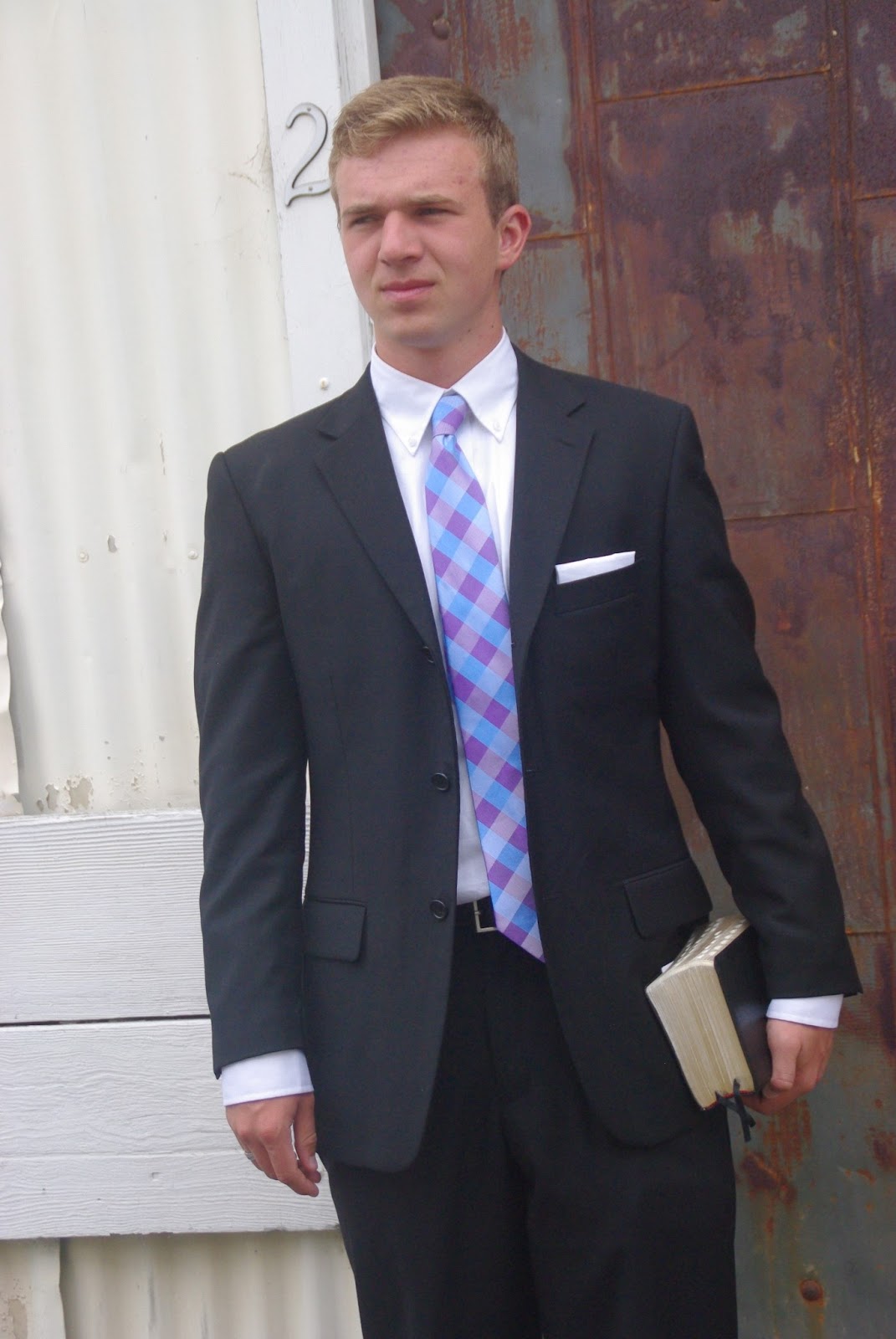
Isn't this a cute picture?  We took it at church the Sunday before he left.

And a couple months ago I said goodbye to Grandma Alice.  The timing wasn't good to take off work for an out-of-state funeral, but she was the last of my grandparents and Jamie insisted I go.  And I'm glad I was there to say goodbye, and it was nice to see so many cousins I hadn't seen in years.

The Delta, UT cemetery.

No, they didn't all dress that way for the funeral - they were getting ready to drive home and I guess they wanted to be more comfortable.

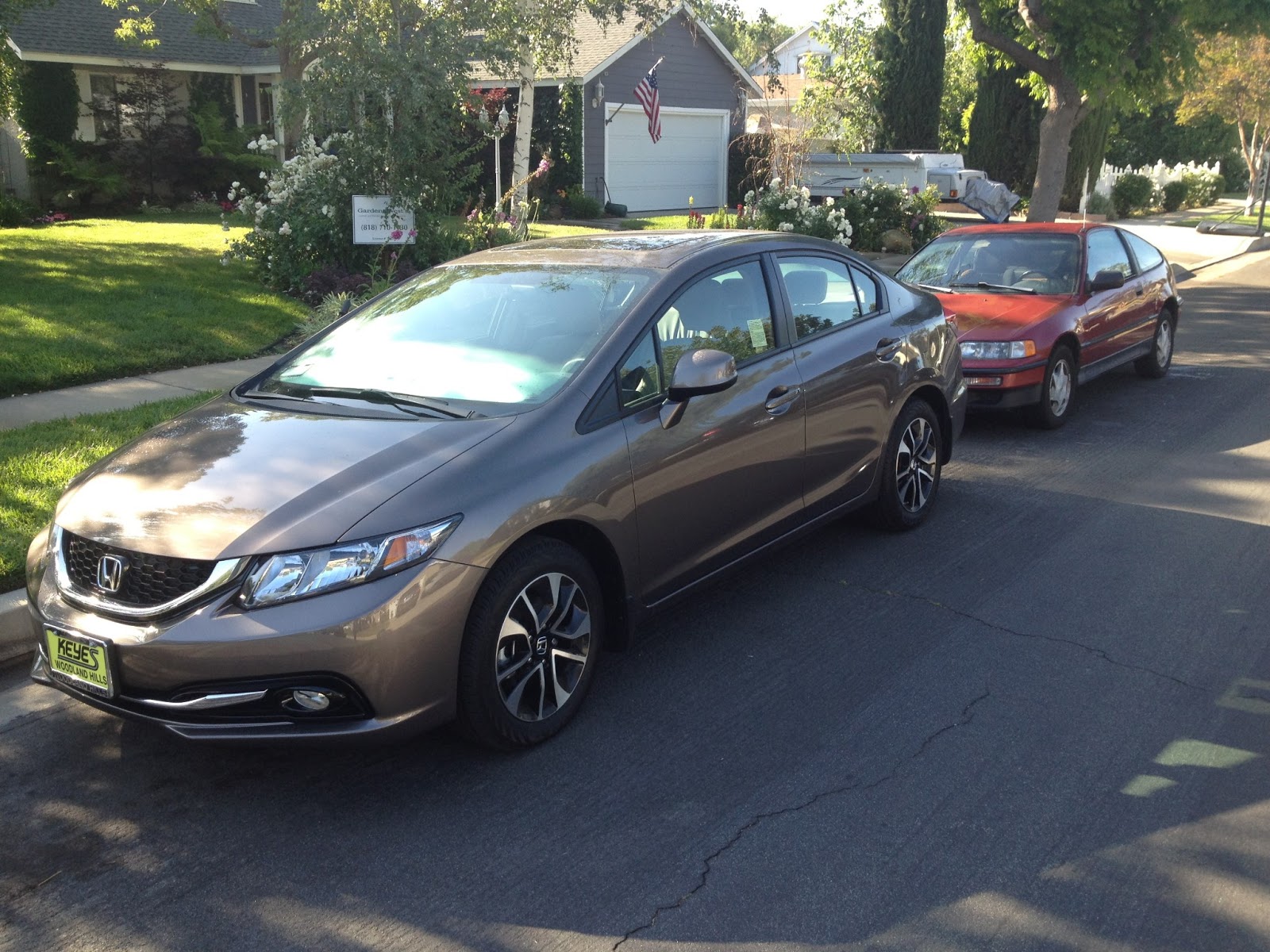
And the last goodbye might seem a little silly, but it was hard for me.  For 22 years I've been driving a 1991 Honda CRX.  It wasn't a practical car for a guy with 4 kids, but it was the car I'd loved ever since I was a teenager.  While my friends were wishing for Porsches and Ferarris, I just wanted a CRX.  (Maybe I set my sights a little low but I'm probably the only one who got the car he wanted, too.)  It still got really good mileage and was great for my commute but it wasn't as reliable as it used to be and was having a few problems (and I'm not a "car guy" who can fix problems).  It was surprisingly hard to see it drive away, but having a brand new car helps.


When Hondas are so reliable you can drive one for 22 years with minimal problems, you tend to stick with what works.

Wednesday, July 3, 2013

Perspective

If you've already read David McCullough's excellent 1776 you might not find a lot of new information in Joseph Ellis' newest book, Revolutionary Summer: The Birth of American Independence. In fact, I think Ellis himself has already covered some of the same ground in his other books such as His Excellency, First Family, and Founding Brothers. What Ellis brings to the summer of 1776, however, is perspective.

We get a perspective of John Adams trying to manage a revolution while events quickly spin beyond his control. Adams could see that any attempt at reconcilliation with Britain was pointless, but not everyone in the Continental Congress was as convinced. In May he wrote what has come to be known as the Preamble to The Declaration of Independence. Nonetheless, he orchestrated things as well as he could in Philadelphia, got someone else to write an 'official' Declaration, and as the head of the Board of War and Ordnance was one of the few who knew just how badly things were going with the army. All the while he had to worry about his family in Boston, who was dealing with an enemy even more feared than Great Britain: smallpox.

We get the perspective of George Washington, trying to live up to the expectations of the Continental Congress and assemble an army bearing some semblance of order to face the well-trained and professional army just arrived from overseas. Everyone expected great things after Bunker Hill (which was actually a British victory, but so very costly for them) but New York was a very different situation. The city and its islands were essentially indefensible, and the sympathies of the inhabitants leaned more toward the British. Washington’s attempted defense ended in a costly and embarrassing defeat that had the potential to end the nascent rebellion just as it was beginning.

We get Benjamin Franklin's confidence that "The Cause" would prevail. He even accused King George of being the cause of the rebellion. If not for the way he treated the colonies by sending armies and foreign mercenaries to oppress them, the colonists would have been happy subjects.  The king's actions had effectively started the war according to Franklin's logic.

And we get the perspective of just how close it came to going the other way that summer. Ellis dispels any myths we might still have from our grade-school education that the American Revolution was accomplished with the signing of The Declaration of Independence, or that the war was won handily by a rag-tag bunch of scrappy colonists confidently and enthusiastically backing the American Cause. In fact, few people considered themselves "Americans" at the time; instead they were Virginians, Pennsylvanians, Bostonians, etc. Unity would come, but it was precarious in 1776.

But the best perspective, in my opinion, was why General Howe (and his brother Admiral Howe) failed to deliver a decisive blow in New York that could have destroyed the Continental Army. Having served in America previously and having a feeling of brotherhood for the Americans, General Howe wanted to go softly and play the part of the diplomat – ending the rebellion with minimal loss of life on both sides. It's a surprisingly human perspective we don't usually grant to the "enemy" in the war. And to me that was the main value in this short book, and why I always jump on the opportunity to read a book by Joseph Ellis. (I received an advance copy from Amazon Vine.)

Saturday, June 29, 2013

"The Arctic shows no mercy..."

Looking for a great summer read?  I've come across several excellent books the last few months I'd recommend like The Last of the Doughboys, Toms River, and The Boys in the Boat, and I'll add one more: If you loved Unbroken (and who didn't? It's still on the NYTimes best-seller list) you'll love Frozen in Time: An Epic Story of Survival and a Modern Quest for Lost Heroes of World War II by Mitchell Zuckoff, too.

In November 1942 a cargo plane on its way to Europe crashed on the Greenland ice cap. The crew of 5 survived the crash but were in a dangerous situation. No one knew exactly where they were, and four days later a B-17 involved in the search-and-rescue with 9 men aboard crashed as well. With winter weather making searches difficult and frequently impossible, the men faced sub-zero temperatures and hurricane force winds with little protection except a plane broken in half and only a couple of days worth of food. Even more frightening was the glacier they sat on, which was riddled with deep crevasses that were hidden by thin layers of snow and ice preventing them from leaving and keeping rescuers from reaching them.
This is an incredible story of danger and survival in one of the least hospitable places on earth. It's by the same author who wrote Lost in Shangri-La but I think this one is better. (It's a lot like Unbroken but with a Shackleton-like twist.) The situation of the crashed men continually goes from bad to worse, and would-be rescuers willingly put their lives at risk for strangers. It's a story full of heroes, but it's also two stories in one as Zuckoff tells of the modern-day efforts to find the wreckage and retrieve any bodies still on the ice cap – a story that's still in process. (I received an advance copy from Amazon Vine.)

Friday, June 21, 2013

"Some beauty which ordinary men can't see"

"In a sport like this – hard work, not much glory... – well, there must be some beauty which ordinary men can't see, but extraordinary men do."
— George Yeoman Pocock

What do you know about the sport of rowing, or "crew" as it is called? All I 'knew' was that it seemed to be a sport for rich kids at snooty East Coast prep schools. And while that's probably not entirely inaccurate, it's also not the whole picture. Most importantly it's not the picture painted by Daniel James Brown in The Boys in the Boat: Nine Americans and Their Epic Quest for Gold at the 1936 Berlin Olympics.

Before the Olympics became dominated by corporate-sponsored athletes, the gold medal for Crew (the sport of rowing a racing shell) at the 1936 Berlin Olympics was won by a team of students from the University of Washington. They not only beat their West Coast rivals (UC Berkeley) but the elite East Coast teams as well to earn the honor of representing their country. And in a thrilling come-from-behind race they beat prestigious European teams despite an unfair disadvantage. They were not a bunch of over-privileged kids whose parents rolled in the highest levels of society but "the sons of loggers, shipyard workers, and farmers." They were mostly kids for whom the Depression had taken a huge toll, and being on a team meant not scholarships but a chance the school might help them find a job.

Brown introduces us to the coach and the whole team, but the heart of his story is one rower who came from especially difficult circumstances. Joe Rantz had known more than his fair share of hardship including the death of his mother, but when his father abandoned him as a teenager he had to quickly learn to fend for himself. Going to the university seemed like a way out of poverty, and through his hard manual labor and scrimping and saving he managed to pay for school one year at a time. Being part of a team, however, required him to trust others more than he dared – more than life had taught him was safe.

Brown is truly a master story-teller as he puts the reader in the middle of the Great Depression with all its uncertainty, inequality, and fear. He also mixes in that other threat looming on the horizon in the 1930s: Hitler and Nazi Germany. Joe and his teammates quickly became people I cared about and I found myself unable to put the book down and cheering each success and sorrowing over each setback. I especially loved the quotes from George Pocock, the wise yet unassuming boat-builder for the team who sees a spiritual side of the sport and the way it can build character through teamwork. I even found myself wishing to slip into a boat and start rowing! This is an inspiring book I highly recommend.  (I received an advance copy from Amazon Vine.)

"It is hard to make that boat go as fast as you want to. The enemy, of course, is resistance of the water... but that very water is what supports you and that very enemy is your friend. So is life: the very problems you must overcome also support you and make you stronger in overcoming them."

Sunday, June 16, 2013

Carpinteria 2013

I hope my kids know what a good mom they have!  In addition to camping in Yosemite Jamie also planned for a week at the beach house.  Of course, when all these plans were made we didn't know where or when Braiden would be leaving for his mission, but that never stops Jamie.  Nothing is more important to her than family!

 Braiden and me.

Some days were sunny and beautiful, and so clear we could see the Channel Islands and from Santa Barbara to Ventura...

... and other days we just enjoyed the "June gloom."

Tahoe and Taylor digging a big hole...

... and the younger kids playing in it.
 
Dillon, Maddie, and Jesse at the tide pools.

Grandma Christie with all the grandkids (except Jack, who wasn't feeling well).

We enjoyed movies on the beach a couple of nights.

Jamie wanted to take some "missionary photos" of Braiden around town (she's seen a lot of them on Facebook - apparently it's a popular thing in Utah).

She even rounded up some 'street urchins' for him to teach.

Only a week and a half to go.
 
Too bad vacations have to end.

Saturday, June 8, 2013

Yosemite 2013

Since Braiden will be leaving us again in a month – this time for 2 years – Jamie has been trying to plan a special family vacation and we were lucky enough to get camping reservations in Yosemite on Memorial Day weekend.

Even with the carrier on the top of the car the poor kids were packed in among all the stuff we had to take.  Oh well, they made it a few hours before the complaining really started.

I think the last time we went to Yosemite was around 2006...

... and it looks like the kids have grown a little since then.  The view is a little better from the left side parking lot – that's Bridal Veil Falls above Taylor's shoulder.  (And I think the air is clearer, too.)

We planned to do a lot more hiking than we ended up doing, but Vernal Falls was strenuous enough.  Here's a picture from the hike on the way up.

And a picture from the top.

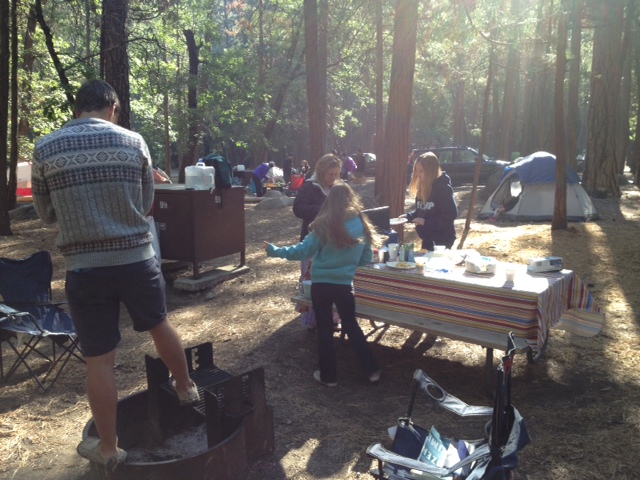
Home for the weekend: Upper Pines campground.  Breakfast always tastes better out in the woods.
 

Chillin' at the dumpster.


It turned out they had church Sunday morning.  Nearby LDS wards take turns holding Sacrament meeting.

After church we hiked up to Yosemite Falls.  Of course, the kids hiked all the way up to the falls.  Taylor needed a really close look.

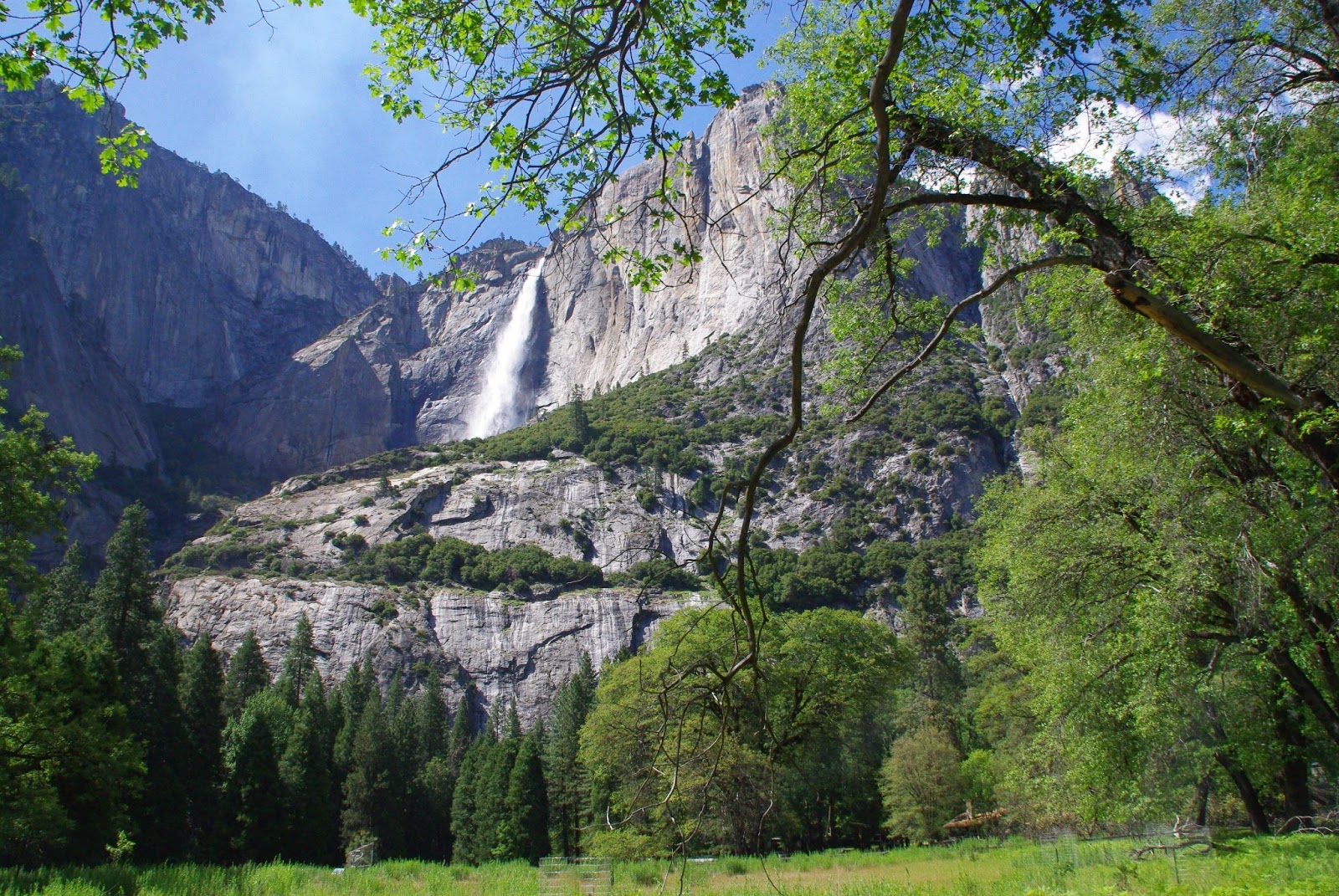
Yosemite Falls.