We just got a second set of missionaries in our ward – sister missionaries. We had them over for dinner last week and they shared this with us. It's from the special broadcast fireside earlier this year. It's too good not to share again.

Thursday, October 10, 2013

Friday, October 4, 2013
Watch me pull a rabbit...
I'm not sure why but there were certain names that loomed large when I was a kid. Unfortunately, many of them were "bad guys" like the Red Baron, Billy the Kid, or Jesse James. It wasn't that I admired any of them (remember the episode of "The Brady Bunch" where Bobby has an unhealthy obsession with Jesse James?), but there was a strange fascination associated with such notorious characters. But I'm somewhat mystified as to why one particular name loomed equally large: Harry Houdini. I was never very interested in magic or magicians and yet my mind always associated him as "legendary" in a similar way. (On further reflection, I think my friend Aaron talked about him a lot.)
 The Secret Life of Houdini: The Making of America's First Superhero by William Kalush and Larry Sloman details his humble beginnings as Ehrich Weiss, the son of a rabbi, to his life as an international celebrity. He is best remembered as a famous escape artist (and his name is still associated with getting out of a tight situation), but even as a child he displayed an unusual talent for magic and picking locks. Early on he struggled to make a living with magic, however, and found a more receptive audience for tricks like mind-reading and ‘speaking with the dead’ in a traveling show. The authors tell how he'd visit local bars and cemeteries when he first entered a new town and gather information about people who might have recently died – information which he could use in his show that evening. Later in life he earnestly regretted that, and he worked to expose such charlatans.
Spiritualism was very popular at the time and enjoyed prominent supporters like Sir Arthur Conan Doyle, author of the Sherlock Holmes mysteries. Doyle and Houdini were actually quite good friends, and Doyle (among MANY others) actually believed Houdini had extraordinary or special powers. Houdini insisted that it was only sleight-of-hand, but Doyle thought Houdini was simply unaware of the true source of his power. Houdini's initial interest in Spiritualism was sincere because he desperately wanted to contact his deceased mother, but when he concluded it was all fake he made it a personal crusade to expose the Spiritualists, and some of his exploits were very funny. Apparently people visiting a spirit medium would usually sit in the dark holding hands while the spirits would communicate through a small trumpet (kind of like what a cheerleader might use, I think). Houdini would sneakily smear "lampblack" (which sounds like black shoe polish) on the mouthpiece of the trumpet, so that when they turned the lights back on the medium would have a black circle around his mouth. You can see why that might make the Spiritualists angry, and not only did it ruin his friendship with Sir Arthur but the authors speculate the Spiritualists had a hand in his death.
But Houdini was more than just a magician. He was an early devotee of flying, becoming the first person to achieve sustained flight in Australia, and he acted in motion pictures. The authors also offer evidence that Houdini may have been a spy for the American government while traveling in Europe. I first heard of this book in a radio interview with the author several years ago, although the possible spying activities weren't as prominent in the book as the interview might suggest. This claim has turned out to be rather controversial for some people, but to me it sounded plausible enough since I knew so little about him to begin with. But this has become one of those "favorite books” that I still think about now and then – especially when I see signs around my neighborhood for psychics and fortune tellers. (And just for the record: I do not think the Red Baron was a "bad guy" – he was actually a very decent guy who was just on the side of the enemy. Someday I’ll review the biography I read about him.)
The Secret Life of Houdini: The Making of America's First Superhero by William Kalush and Larry Sloman details his humble beginnings as Ehrich Weiss, the son of a rabbi, to his life as an international celebrity. He is best remembered as a famous escape artist (and his name is still associated with getting out of a tight situation), but even as a child he displayed an unusual talent for magic and picking locks. Early on he struggled to make a living with magic, however, and found a more receptive audience for tricks like mind-reading and ‘speaking with the dead’ in a traveling show. The authors tell how he'd visit local bars and cemeteries when he first entered a new town and gather information about people who might have recently died – information which he could use in his show that evening. Later in life he earnestly regretted that, and he worked to expose such charlatans. Spiritualism was very popular at the time and enjoyed prominent supporters like Sir Arthur Conan Doyle, author of the Sherlock Holmes mysteries. Doyle and Houdini were actually quite good friends, and Doyle (among MANY others) actually believed Houdini had extraordinary or special powers. Houdini insisted that it was only sleight-of-hand, but Doyle thought Houdini was simply unaware of the true source of his power. Houdini's initial interest in Spiritualism was sincere because he desperately wanted to contact his deceased mother, but when he concluded it was all fake he made it a personal crusade to expose the Spiritualists, and some of his exploits were very funny. Apparently people visiting a spirit medium would usually sit in the dark holding hands while the spirits would communicate through a small trumpet (kind of like what a cheerleader might use, I think). Houdini would sneakily smear "lampblack" (which sounds like black shoe polish) on the mouthpiece of the trumpet, so that when they turned the lights back on the medium would have a black circle around his mouth. You can see why that might make the Spiritualists angry, and not only did it ruin his friendship with Sir Arthur but the authors speculate the Spiritualists had a hand in his death.
But Houdini was more than just a magician. He was an early devotee of flying, becoming the first person to achieve sustained flight in Australia, and he acted in motion pictures. The authors also offer evidence that Houdini may have been a spy for the American government while traveling in Europe. I first heard of this book in a radio interview with the author several years ago, although the possible spying activities weren't as prominent in the book as the interview might suggest. This claim has turned out to be rather controversial for some people, but to me it sounded plausible enough since I knew so little about him to begin with. But this has become one of those "favorite books” that I still think about now and then – especially when I see signs around my neighborhood for psychics and fortune tellers. (And just for the record: I do not think the Red Baron was a "bad guy" – he was actually a very decent guy who was just on the side of the enemy. Someday I’ll review the biography I read about him.)
Friday, September 27, 2013
The moon is as big as a basketball
The "space race" was actually a byproduct of the "arms race" between the USA and USSR and had its beginnings in Nazi Germany. In September 1944, Hitler's army began launching V-2 rockets, the world's first ballistic missiles, against Britain. And when the war ended the Americans and Soviets quickly spirited away any bit of this new technology they could find, including the scientists and engineers who had developed it.
 But while America subsequently pursued a strategy of long-range bombers to deliver nuclear weapons, the USSR began a missile program which couldn't be defended against like a squadron of flying planes could be. The genius behind their program was a Soviet engineer named Sergey Korolev (or Korolyov) but known outside a very small circle only as the "Chief Designer." After getting the rockets to work he convinced Nikita Khruschev to pursue the launch of the world's first artificial satellite, and on October 4, 1957 Sputnik was launched. But while most leaders in both countries dismissed it as a ridiculous waste of resources, the public was fascinated and terrified by this newly demonstrated capability of the Russians. It quickly turned into a public relations coup.
But Red Moon Rising: Sputnik and the Hidden Rivalries that Ignited the Space Age isn't just a history of the beginnings of the space program. Matthew Brzezinski delves into the internal politics of both the Soviet Union and the United States, and that is perhaps the strongest part of the book. From Khruschev and the Kremlin to Eisenhower, Johnson and Nixon, the politics of the space race are discussed in detail which never became boring. He also mixes in relevant side stories, such as the U-2 spy planes which so infuriated Khruschev, as well as Korolev's rivalry with Valentin Glushko, another brilliant Soviet rocket scientist. Wernher von Braun, the former Nazi developer of the V-2 who later helped Walt Disney pitch Disneyland's Tomorrowland on ABC television, became the head of America's missile program, and is a central part of the American story.
Brzezinski's story-telling skills are superb, and although news from NASA has became fairly mundane, he takes the political intrigue and technological setbacks behind the scenes and turns it into a gripping narrative. You could feel the exhilaration at the successful launch of Sputnik, and the disappointment when the American Vanguard rocket exploded on the launch pad. Alternating back and forth between the Soviets and the Americans, he keeps the information and action flowing fast. If you liked Annie Jacobsen's Area 51 or just enjoy Cold War history this book will become one of your "all-time most favorite books ever," too.
But while America subsequently pursued a strategy of long-range bombers to deliver nuclear weapons, the USSR began a missile program which couldn't be defended against like a squadron of flying planes could be. The genius behind their program was a Soviet engineer named Sergey Korolev (or Korolyov) but known outside a very small circle only as the "Chief Designer." After getting the rockets to work he convinced Nikita Khruschev to pursue the launch of the world's first artificial satellite, and on October 4, 1957 Sputnik was launched. But while most leaders in both countries dismissed it as a ridiculous waste of resources, the public was fascinated and terrified by this newly demonstrated capability of the Russians. It quickly turned into a public relations coup. Brzezinski's story-telling skills are superb, and although news from NASA has became fairly mundane, he takes the political intrigue and technological setbacks behind the scenes and turns it into a gripping narrative. You could feel the exhilaration at the successful launch of Sputnik, and the disappointment when the American Vanguard rocket exploded on the launch pad. Alternating back and forth between the Soviets and the Americans, he keeps the information and action flowing fast. If you liked Annie Jacobsen's Area 51 or just enjoy Cold War history this book will become one of your "all-time most favorite books ever," too.
Thursday, September 19, 2013
Six Frigates
We tend to forget that 1776 wasn't the end of America's struggle for independence. Fighting didn't even end until 1783 and the country wasn't exactly unified – it was just a loose confederation of thirteen states. And it wasn't until the Constitution was adopted in 1787 that we had a real government with George Washington as President. Even then Great Britain kept pushing us around while France and Spain waited patiently for the fragile republic to fall apart so they could pick off the pieces. It wasn't really until the War of 1812 (which finished in 1814 and could reasonably be considered the end of the Revolutionary War) that America had proven itself.
 But keeping America free during those intervening years turned out to be a real struggle. After the troubles with Britain, many of the Founding Fathers had a strong aversion to having a standing army – it was seen as dangerous – so after the Revolutionary War the small Continental Navy was disbanded. However, with the predations of pirates and privateers upon American merchant vessels and shipping interests, it soon became clear that a navy was essential, especially at a time when the British Royal Navy was the undisputed ruler of the seas. At the urging of Vice President John Adams, President Washington authorized the building of six frigates, which was a type of warship at the time. Washington was given a list of names for the ships and he simply chose the first six that were on the list – United States, President, Congress, Constitution, Constellation, and Chesapeake – and Ian W. Toll writes a real page-turner in his book Six Frigates: The Epic History of the Founding of the U.S. Navy that is one of my "all-time most favorite books ever."
Shipbuilder Joshua Humphreys was chosen to design the frigates and came up with a plan that accommodated many of the advantages of ships that were both larger and smaller than frigates typical of the time. And although the ships were all built in different shipyards, what resulted were strong ships which performed surprisingly well in the Quasi-War with France, the conflicts with the Barbary pirates of Africa, and against Britain in the War of 1812. The captains and admirals involved are discussed, such as Truxton, Bainbridge, Decatur, Hull and Rodgers, and they and their exploits and accomplishments come alive in wonderful detail, and many nations – especially Britain – were forced to come to terms with the idea of another nation with a strong presence on the seas.
I was thoroughly surprised by how engaging and readable this book is – I honestly had not expected much from "a history of the founding of the U. S. Navy." But Mr. Toll (a financial analyst and political aide, of all things!) has written an outstanding and well-researched book that makes an otherwise little-known part of history come alive. The only book that comes close, in my opinion, is Perilous Fight by Stephen Budiansky which covers a much shorter period of time and focuses on the War of 1812. From the brutality and violence of sea battles to the political rivalries and economic challenges, the history is placed into proper context to allow the reader to understand the forces behind the decisions and the historical impact. I was almost sad to see this book end and look forward to reading his next book... if I ever find time to get around to it!
But keeping America free during those intervening years turned out to be a real struggle. After the troubles with Britain, many of the Founding Fathers had a strong aversion to having a standing army – it was seen as dangerous – so after the Revolutionary War the small Continental Navy was disbanded. However, with the predations of pirates and privateers upon American merchant vessels and shipping interests, it soon became clear that a navy was essential, especially at a time when the British Royal Navy was the undisputed ruler of the seas. At the urging of Vice President John Adams, President Washington authorized the building of six frigates, which was a type of warship at the time. Washington was given a list of names for the ships and he simply chose the first six that were on the list – United States, President, Congress, Constitution, Constellation, and Chesapeake – and Ian W. Toll writes a real page-turner in his book Six Frigates: The Epic History of the Founding of the U.S. Navy that is one of my "all-time most favorite books ever."Shipbuilder Joshua Humphreys was chosen to design the frigates and came up with a plan that accommodated many of the advantages of ships that were both larger and smaller than frigates typical of the time. And although the ships were all built in different shipyards, what resulted were strong ships which performed surprisingly well in the Quasi-War with France, the conflicts with the Barbary pirates of Africa, and against Britain in the War of 1812. The captains and admirals involved are discussed, such as Truxton, Bainbridge, Decatur, Hull and Rodgers, and they and their exploits and accomplishments come alive in wonderful detail, and many nations – especially Britain – were forced to come to terms with the idea of another nation with a strong presence on the seas.
I was thoroughly surprised by how engaging and readable this book is – I honestly had not expected much from "a history of the founding of the U. S. Navy." But Mr. Toll (a financial analyst and political aide, of all things!) has written an outstanding and well-researched book that makes an otherwise little-known part of history come alive. The only book that comes close, in my opinion, is Perilous Fight by Stephen Budiansky which covers a much shorter period of time and focuses on the War of 1812. From the brutality and violence of sea battles to the political rivalries and economic challenges, the history is placed into proper context to allow the reader to understand the forces behind the decisions and the historical impact. I was almost sad to see this book end and look forward to reading his next book... if I ever find time to get around to it!
Thursday, September 12, 2013
Big Sur 2013
Do you know how hard it is to get camping reservations in California? It takes persistence and skill, but mostly a whole lot of luck.
A few months ago Jamie was just checking to see if anything was available and came across a few openings at Big Sur. We haven't been up there in years so that's where we spent our Labor Day weekend along with our good friends the Jorgenson's. It was kind of weird going camping without Braiden (who's on his mission in England) so Scott came with us and the Jorgenson's brought Harrison.


A few months ago Jamie was just checking to see if anything was available and came across a few openings at Big Sur. We haven't been up there in years so that's where we spent our Labor Day weekend along with our good friends the Jorgenson's. It was kind of weird going camping without Braiden (who's on his mission in England) so Scott came with us and the Jorgenson's brought Harrison.

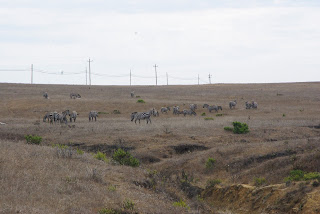
We stopped to see zebras near Hearst Castle, because - after all - how often do you see a herd of zebras in California?

What is this, an animal theme? Next we stopped to see Elephant seals...
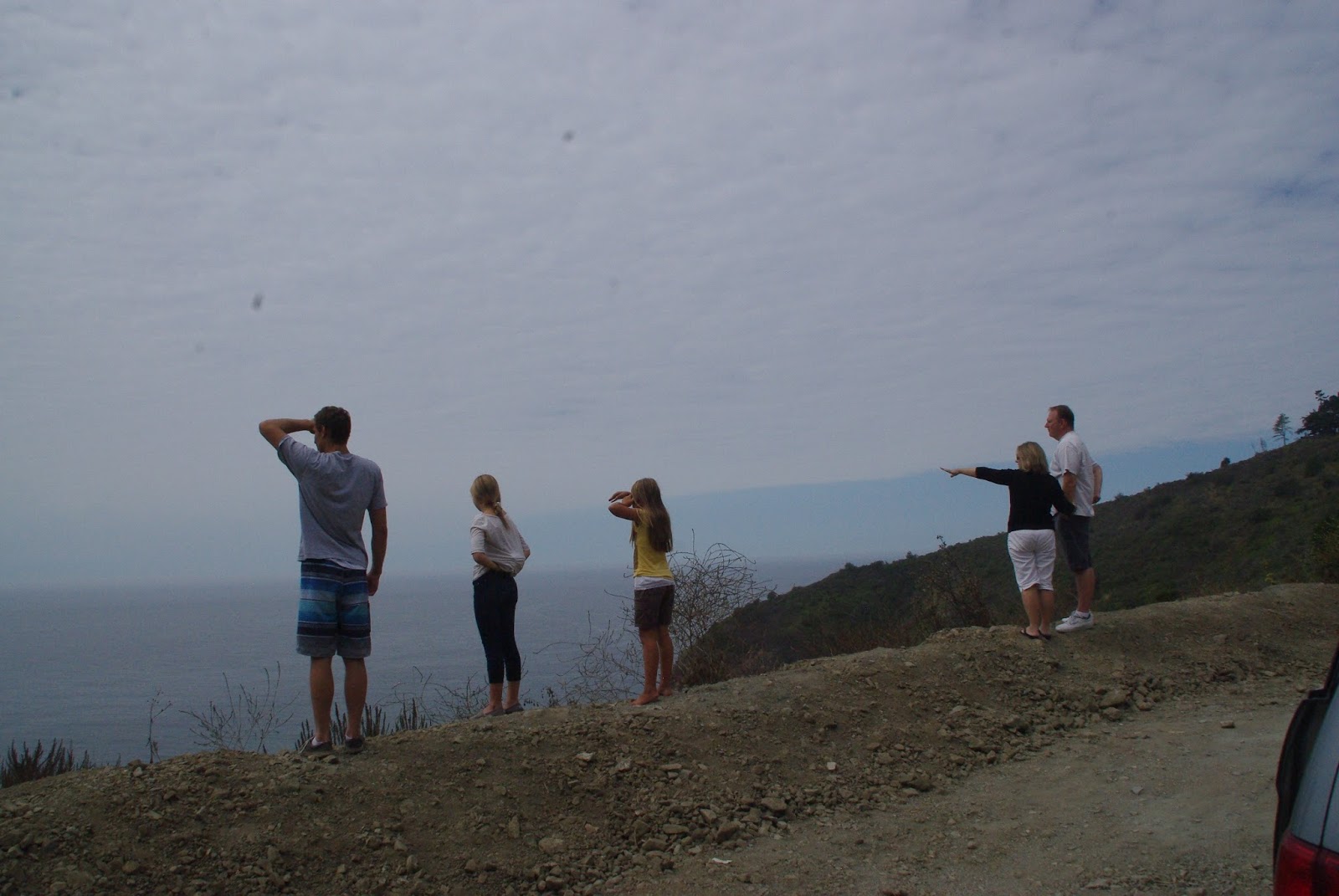
... and here we are on the side of the road looking at whale spouts on the ocean.

Even the girls and Rob jumped off the rock. This is Harrison, Logan, Tahoe, and Taylor.

It's kind of hard to see but in the shadows there's McWay Falls - a waterfall right on the beach.

Is there a more beautiful coast in the world? I don't think so.

Of course, Taylor takes the unconventional way across the bridge.

I'm sure Pfieffer Falls is a lot prettier when there's more water.

Big Sur isn't just beautiful coastline - it's beautiful redwoods, too.

Last time we were at Pfieffer Beach (in 2005) Maddie was really small. Here she is (on the right) with her cousins Grace and Jesse.

This time Maddie was the only one there.

And you think the boys could resist climbing those big rocks on the beach?
There were about a dozen more beautiful pictures that I'd like to have included, but gotta stop at some point. It was fun.
Thursday, September 5, 2013
Tin cans
"Our schoolchildren should know about [this] incident, and our enemies should ponder it."
– Herman Wouk (in his novel War and Remembrance)
I decided to pull out some old Amazon reviews of a few of my "all-time most favorite books ever" that I haven't posted here before, and I'll start with James D. Hornfischer's The Last Stand of the Tin Can Sailors: The Extraordinary World War II Story of the U.S. Navy's Finest Hour.
 In late October 1944 the US Navy guarded the seas off the Philippines protecting the return of General MacArthur. With Admiral Kinkaid's 7th Fleet guarding from the south and Admiral Halsey's 3rd Fleet guarding the north, the ships in the middle didn't expect to see much action. But Japan knew their days were numbered and invented a daring plan to protect their position and resources in the Philippines by attacking from both sides. Kinkaid's troops soundly defeated Nishimura and Shima in the Surigao Strait, but Halsey had very foolishly abandoned the San Bernardino Strait in the north. He wasn't happy with his mostly passive role in the battle, and after a minor skirmish with the Japanese he chased after Ozawa and was baited away into a chase to the north instead of guarding his assigned position. This let Kurita through and left the small destroyers and carrier escorts of Taffy 3 to bear the full brunt of the largest ships to ever sail the seas.
 Outnumbered and outgunned, the men put up a brave front against the monstrous Japanese ships, trying to protect the small carriers which were essential to the landing invasion. Between daring torpedo runs by the destroyer escorts (known to the sailors as "tin cans") and relentless attacks by the few planes which were able to get airborne (almost all without proper armaments and some without any at all) the Americans put up such a fierce fight that Kurita was unsure of the true strength he faced. He even thought he must be facing the absent Halsey. In the end the Japanese suffered such serious losses that they retreated, but not before sinking 3 destroyers and the only American carrier sunk by enemy surface fire. (The battle also saw the first sinking of an American ship by a feared new Japanese weapon – the kamikaze suicide pilot – when the St. Lo of Taffy 2 was sunk.)
This is an excellent and highly inspirational account of the Battle of Leyte Gulf, or more specifically the Battle off Samar, fought by the men of Taffy 3 Task Unit. The sad part is that Admiral Halsey managed to very skillfully and unjustly take credit for the victory even though his ego had prompted him on a wild goose chase, while the bravery of the men who actually fought went mostly unsung. They endured relentless pounding by far bigger ships with bigger bombs and many spent 48 hours floating in the wide ocean waiting for a rescue that came shamefully late. But this is a story of the kind of bravery that won the war in the Pacific – even retreating Japanese soldiers saluted the men in the water as they steamed by. It's the kind of story that makes you appreciate the incredible valor and sacrifices men made during the war.
Just a note about reading James Hornfischer: I've read two of his books and have had another on the shelf for years now (another problem with getting so many books from Vine – I don't always get around to reading those on my list) but he's a bit challenging to read, especially when you're unfamiliar with ships and planes. Once I stopped worrying about trying to understand and remember all the technical details it became a lot more enjoyable. But please do not let that stop you from reading his outstanding histories – especially this one!
Thursday, August 29, 2013
Summer of pests!
I planned this summer’s vegetable garden carefully last spring. I've mostly grown vegetables in pots before but made a raised bed this year on the side of the house where it gets a lot of summer sun, and even ordered some different seed varieties from a Burpee catalog. And after reading some books about organic gardening I tried to go easy on chemical fertilizers and pesticides, but the results were disappointing. Apparently I'm not the only one who wants to eat what I'm growing! Here's the run-down of what I grew and the problems I had.
Burpee calls the "Oasis hybrid turnip" a "salad turnip," and they taste like radishes only milder. Jamie liked them better than I did (I thought they had a bit of an aftertaste) but maybe I'll try them again this fall.

Some carrots and parsnips from spring were very slow growing and still ended up small, but they were delicious oven-roasted with rosemary fresh from the garden and store-bought potatoes and red onions. This fall I'll try a shorter parsnip (and plant earlier) and see if that works any better.


I was really looking forward to the "Purple Dragon" carrots. The picture in the catalog shows the purple color almost into the center, but mine only had purple skin and were either orange or yellow inside. They tasted kind of bitter when eaten raw, but were better steamed.

I forgot to take a picture of the "Sweet Zuke” zucchini. They tasted good (roasted, above) but weren't as slender as what I've grown before. I might include one "Sweet Zuke" plant next year, but I'll probably go back to planting a couple of the regular zucchini.
I was also looking forward to the "Fortex" green beans. They grow about 8" long, are fatter and meatier, and have a really good flavor. I don't think they bear as heavily as some newer varieties but unfortunately the pests beat me to them most of the time.

Although they didn't eat the actual beans, caterpillars were out of control. I'm definitely picking up a Bt spray before my fall garden gets growing.


 The worst pest turned out to be rats! Not only did they eat a LOT of beans but ALL the tomatoes! They're not the big Norway rats but a smaller (and cuter) variety I've heard called "tree rats." I killed 7 or 8 but the snap traps only worked for a little while, and the Rat Zapper was a total failure – except as a rat feeder! I don't want to use poison because of the neighbor's dog (and the owls we sometimes see), so I'm open to suggestions.

Burpee calls the "Oasis hybrid turnip" a "salad turnip," and they taste like radishes only milder. Jamie liked them better than I did (I thought they had a bit of an aftertaste) but maybe I'll try them again this fall.

Some carrots and parsnips from spring were very slow growing and still ended up small, but they were delicious oven-roasted with rosemary fresh from the garden and store-bought potatoes and red onions. This fall I'll try a shorter parsnip (and plant earlier) and see if that works any better.


I was really looking forward to the "Purple Dragon" carrots. The picture in the catalog shows the purple color almost into the center, but mine only had purple skin and were either orange or yellow inside. They tasted kind of bitter when eaten raw, but were better steamed.

I forgot to take a picture of the "Sweet Zuke” zucchini. They tasted good (roasted, above) but weren't as slender as what I've grown before. I might include one "Sweet Zuke" plant next year, but I'll probably go back to planting a couple of the regular zucchini.
I was also looking forward to the "Fortex" green beans. They grow about 8" long, are fatter and meatier, and have a really good flavor. I don't think they bear as heavily as some newer varieties but unfortunately the pests beat me to them most of the time.

The Fortex beans are the bigger ones on the left. I also planted some tricolor bush beans from a Renee's Garden packet.
Although they didn't eat the actual beans, caterpillars were out of control. I'm definitely picking up a Bt spray before my fall garden gets growing.

Lot's of these little worms...

... and a few of these monsters.

Maddie and I fed the caterpillars we found to the 'blue-belly' lizards.

This 'alligator' lizard was missing part of his tail. Some had really pretty red markings.

I love you Remy, but Emile and the others are NOT welcome!
Friday, August 23, 2013
Why read history?
"I am skeptical about the idea that we can learn much from history, at least in the sense that knowledge of past follies will prevent us from making similar blunders in the future... And yet it is important to know what happened before, and to try and make sense of it. For if we don't, we cannot understand our own times."
I was surprised to see such a statement at the beginning of a book about history. We often think 'those who don't learn from the past are doomed to repeat it,' and yet it seems pretty obvious we're not learning the lessons history teaches. To see it put so profoundly in writing was a pleasant affirmation, for me at least. And making some sense of what happened seems to be a recurrent theme in Year Zero: A History of 1945 by Ian Buruma (which I received from Amazon Vine).
 The world was a very different place after the Second World War. Not only had the conflict touched so many places around the globe, but news of the atrocities committed deeply shocked and embarrassed people. Some had cause to celebrate and others to fear and mourn. Cities lay in ruins and people were starving. Governments were changed – not just in Germany and Japan – but all of Continental Europe and most of Asia, colonies teetered on the brink of collapse, and the United Nations was created. Buruma looks around the world and catalogs what happened by topic: hunger, revenge, displaced persons, what became of collaborators, reeducation, and sex (not just rape but also prostitution, which was sometimes engaged in for profit and sometimes to feed starving children at home). It's not always a celebratory view with the victors, but often a detailing of the suffering and uncertainty of those whose lives had been upended by such a world-wide calamity.
And yet, in spite of the often dismal history it recounts, Buruma does a fascinating job of telling the story and showing all sides such that you gain a better understanding of the time and place. His judgments are always tempered by an explanation of the conditions and why things happened the way they did – right or wrong – and is a more balanced and global view than The Bitter Road to Freedom: A New History of the Liberation of Europe (which I should review soon). And while this is ostensibly “a history of 1945,” Buruma expands his scope where appropriate and necessary. The narrative is replete with individual stories of those who lived it, as well as that of his Dutch father who was forced into labor by the Germans, and serves to personalize the tragedy in small ways. I found it to be a sobering yet worthwhile account, and yet it not only helps to make sense of the world that was built on the ruins, but sometimes I think I see even more modern parallels.
Thursday, August 15, 2013
Your worst nightmare?
Do you like scary movies? I do, but I don't care for the 'slasher' movies that are so common and rely mostly on gore. I much prefer a clever movie that creeps you out with something that's vague and unknown, kind of like "The Village" or "The Grudge;" or a good ghost story like "Poltergeist." "Jaws" is another great scary movie, because – although highly unlikely – it is possible, and you don't always see the shark coming. But watching a movie is safe. You watch from the couch or a seat in the theater, and the fright will all be over in a couple of hours. It's the real world that is a scary place. And I'm not talking about sharks or ghosts or even crazy people.
One of the smallest things in the world is a virus. Some scientists don't even consider viruses to be truly alive, because they need the right host to do anything. But when a virus gets inside it can cause big problems. We're most familiar with viruses like influenza, which can kill but seldom does, and usually just makes you feel lousy for a week. But others, like filoviruses (thread viruses), are truly scary and there's no vaccine or cure, and many researchers are afraid to even work with them. They go by names like Marburg and Ebola, and they'll do to your body in a week or two what it takes the AIDS virus 10 years – and you never saw it coming.
 Richard Preston explains what it's like to get Marburg in his book The Hot Zone: A Terrifying True Story, through the story of "Charles Monet" (a pseudonym) who likely got the virus while visiting the amazing Kitum Cave on Mount Elgon in Kenya. It starts with a severe headache and backache, and progresses to vomiting, diarrhea, and red eye. It ends particularly horribly in what is called "crash and bleed out" about ten days later, and I'll spare you the details of that. In addition to Marburg, Preston describes the closely-related viruses Ebola Zaire and Ebola Sudan, and death rates for these tiny monsters range from 50% to 90% and have wiped out entire villages in central Africa even though it doesn't appear they can spread through the air. But Africa is a long ways away. Could a filovirus end up here? In October 1989 one was found only 15 miles outside Washington DC. The Reston virus, as it is known, appeared to be 100% fatal in monkeys that were imported from the Philippines and were destined for laboratories around the country. Most frightening, it appears that the virus easily became airborne and even spread to people.
Preston has a novelist's flair in his writing, and some critics accuse him of sensationalizing and exaggerating the history, but it's considered non-fiction. And just like his book The Demon in the Freezer (about the smallpox virus), I could hardly put it down and finished in just a couple of days. And it's scary enough that even horror-writer Stephen King said "The first chapter... is one of the most horrifying things I've ever read in my whole life... and then it gets worse. That's what I keep marveling over: it keeps getting worse." So, if you like a good scare once in a while this book will provide it for you. And hopefully you'll recover after a few weeks.
One of the smallest things in the world is a virus. Some scientists don't even consider viruses to be truly alive, because they need the right host to do anything. But when a virus gets inside it can cause big problems. We're most familiar with viruses like influenza, which can kill but seldom does, and usually just makes you feel lousy for a week. But others, like filoviruses (thread viruses), are truly scary and there's no vaccine or cure, and many researchers are afraid to even work with them. They go by names like Marburg and Ebola, and they'll do to your body in a week or two what it takes the AIDS virus 10 years – and you never saw it coming.
Richard Preston explains what it's like to get Marburg in his book The Hot Zone: A Terrifying True Story, through the story of "Charles Monet" (a pseudonym) who likely got the virus while visiting the amazing Kitum Cave on Mount Elgon in Kenya. It starts with a severe headache and backache, and progresses to vomiting, diarrhea, and red eye. It ends particularly horribly in what is called "crash and bleed out" about ten days later, and I'll spare you the details of that. In addition to Marburg, Preston describes the closely-related viruses Ebola Zaire and Ebola Sudan, and death rates for these tiny monsters range from 50% to 90% and have wiped out entire villages in central Africa even though it doesn't appear they can spread through the air. But Africa is a long ways away. Could a filovirus end up here? In October 1989 one was found only 15 miles outside Washington DC. The Reston virus, as it is known, appeared to be 100% fatal in monkeys that were imported from the Philippines and were destined for laboratories around the country. Most frightening, it appears that the virus easily became airborne and even spread to people. Preston has a novelist's flair in his writing, and some critics accuse him of sensationalizing and exaggerating the history, but it's considered non-fiction. And just like his book The Demon in the Freezer (about the smallpox virus), I could hardly put it down and finished in just a couple of days. And it's scary enough that even horror-writer Stephen King said "The first chapter... is one of the most horrifying things I've ever read in my whole life... and then it gets worse. That's what I keep marveling over: it keeps getting worse." So, if you like a good scare once in a while this book will provide it for you. And hopefully you'll recover after a few weeks.
Thursday, August 8, 2013
Hero worship, sports, and Mormons
Sports is often a big part of youth and sometimes adulthood – at least for boys and men. Growing up in Salt Lake we didn't have any professional teams, so for various reasons I became a fan of the Cowboys (football) and the Astros (baseball) and I practically worshipped guys like Roger Staubach, Tony Dorsett, Harvey Martin, Nolan Ryan, and of course – my hero – J. R. Richard. It wasn't until the Jazz moved to Utah that we had a pro basketball team, and it wasn't until the mid 90s that they became a great team with guys like Karl Malone, John Stockton, Jeff Hornacek, and Mark Eaton. And it was a lot of fun following them – very stressful, at times, too! – but I remember one place I worked, every morning after a game, we'd all stand up and discuss the game over the cubicle walls. We felt like the team put Utah on the map and it gave us a lot of pride.
 So I can relate completely to John Moody when he writes about the team of his youth in Kiss It Good-Bye: The Mystery, The Mormon, and the Moral of the 1960 Pittsburgh Pirates. The Pirates hadn't been a winning team until they won the World Series in 1960, beating the Yankees, and a big part of their success that season was due to a pitcher named Vernon Law. Law was a Mormon from Idaho whose fastball and clean living set a great example – especially for a boy like Moody – and the hard-working "iron man" once pitched 18 innings in a single game. But in the revelry following winning the National League pennant, some drunken and rough-housing teammates injured Law's ankle. In spite of the painful injury he won Games 1 and 4 of the Series, but by Game 7 it became apparent that it was affecting his pitching. Because he had to adjust his delivery, it also caused him a torn rotator cuff in his shoulder, and his career never really recovered.
So I can relate completely to John Moody when he writes about the team of his youth in Kiss It Good-Bye: The Mystery, The Mormon, and the Moral of the 1960 Pittsburgh Pirates. The Pirates hadn't been a winning team until they won the World Series in 1960, beating the Yankees, and a big part of their success that season was due to a pitcher named Vernon Law. Law was a Mormon from Idaho whose fastball and clean living set a great example – especially for a boy like Moody – and the hard-working "iron man" once pitched 18 innings in a single game. But in the revelry following winning the National League pennant, some drunken and rough-housing teammates injured Law's ankle. In spite of the painful injury he won Games 1 and 4 of the Series, but by Game 7 it became apparent that it was affecting his pitching. Because he had to adjust his delivery, it also caused him a torn rotator cuff in his shoulder, and his career never really recovered.
First let me clarify that Moody is not a Mormon; he is simply a great admirer of Vernon Law. He explains a lot about the Mormon Church, and not only does he get it right, he is also very admiring of Law's religious beliefs. But in spite of his hero-worship, the book is about more than just Law; it's about a team that pulled together and did something unexpected, as well as a story about the smoky town of Pittsburgh which didn't get a lot of respect back then. It's also his own story of growing up in "Steel-town," and it all comes together in a book that anyone who's ever had a sports hero can relate to. At first, his condescending comparisons of players and kids then and now was annoying, but he had some valid points. And the chapter where he chronicles the Series was told with such excitement that I could barely put the book down. I'm not sure how important or well-known of a "mystery" it was over who caused the injury to Law, but I found the book to be a fun, easy, and nostalgic read. Even though 1960 was way before my time, I could easily relate to the worship of a sports hero, and the way a favorite team gave a small city something to cheer for.
Subscribe to:
Posts (Atom)